
Why Small Businesses Struggle With Taxes—and How Smarter Planning Makes a Difference

For small business owners, taxes are often one of the most misunderstood and stressful parts of running a company. While most entrepreneurs are focused on growing revenue, serving customers, and managing day-to-day operations, tax responsibilities tend to sit in the background until deadlines approach. Unfortunately, this reactive approach is one of the main reasons small businesses overpay taxes, miss deductions, or face avoidable compliance issues.
The truth is that tax problems usually don’t happen because business owners ignore the rules. They happen because corporate tax planning is treated as a once-a-year task rather than an ongoing financial process.
Understanding Business Tax Responsibilities
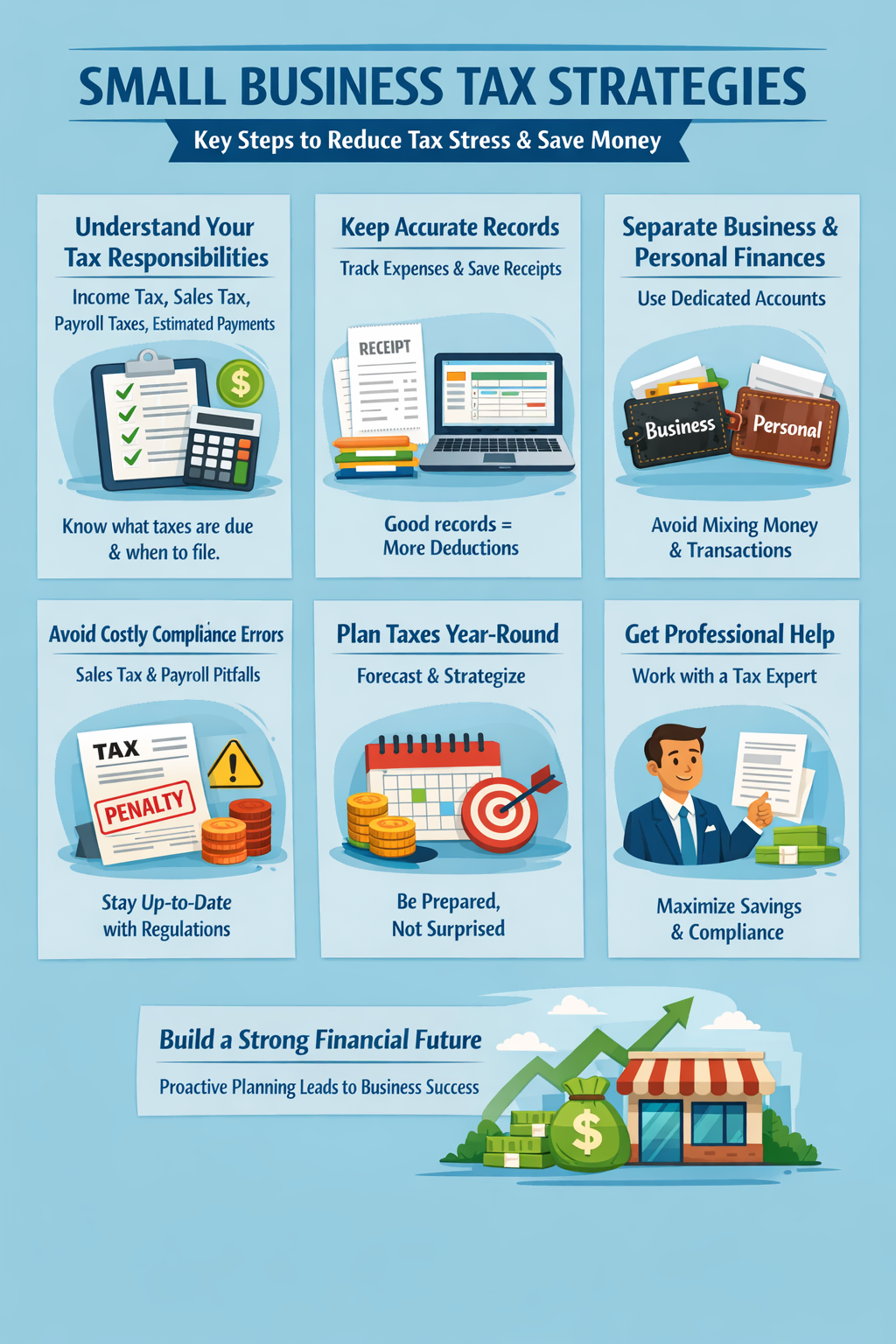
Every business, regardless of size, has tax obligations that must be managed throughout the year. These may include income tax, sales tax, payroll taxes, and estimated tax payments. The specific requirements depend on how the business is structured and where it operates.
Small business owners often underestimate how quickly tax responsibilities can grow as revenue increases or as new services, products, or employees are added. Without a clear understanding of what needs to be filed and when, it becomes easy to fall behind or miscalculate amounts owed.
Creating a simple tax schedule and reviewing obligations regularly can help businesses avoid last-minute stress and unexpected penalties.
Record-Keeping Is the Foundation of Tax Savings
Accurate and consistent record-keeping plays a major role in reducing tax liability. When financial records are incomplete or disorganized, business owners may lose access to deductions they are legally entitled to claim.
Expenses related to operations, marketing, professional services, technology, travel, and equipment are often deductible. However, without proper documentation, these costs can be excluded during tax filing. Over time, this can add up to thousands in unnecessary tax payments.
Using accounting software, reconciling accounts monthly, and keeping digital copies of receipts ensures that financial data is reliable and easy to review when tax season arrives.
Separating Business and Personal Finances
Many small business owners begin by using personal accounts for business transactions. While this may work temporarily, it often leads to confusion, errors, and increased audit risk.
Keeping business and personal finances separate helps in several ways. It makes expense tracking clearer, improves the accuracy of financial statements, and simplifies tax preparation. It also allows business owners to understand the true financial health of their company without personal spending distorting the numbers.
Dedicated business bank accounts and credit cards are simple tools that provide long-term clarity and protection.
Sales Tax and Payroll Errors Are Common and Costly
As a business grows, compliance becomes more complex. Sales tax registration, filing frequency, and remittance rules vary depending on revenue levels and jurisdiction. Missing registration thresholds or filing late can result in penalties and interest.
Payroll introduces additional risk. Incorrect withholdings, late remittances, or misclassifying workers can trigger compliance issues and financial penalties. These problems often arise not from negligence, but from a lack of structured systems.
Regular reviews and professional oversight help ensure these obligations are handled correctly and consistently.
Why Year-Round Tax Planning Matters
Tax planning is not just about filing returns accurately—it’s about making informed financial decisions throughout the year. Businesses that forecast their tax obligations are better prepared to manage cash flow and avoid sudden tax bills.
Year-Round tax Planning allows owners to time purchases, investments, and expenses more strategically. It also reduces uncertainty, making it easier to plan for growth, hiring, or expansion.
When taxes are predictable, financial decisions become more confident and intentional.
The Role of Professional Tax Support
As operations become more complex, professional guidance becomes increasingly valuable. A knowledgeable business tax accountant can help identify missed deductions, ensure compliance, and provide insight into long-term planning opportunities.
Rather than simply preparing tax filings, experienced accountants help businesses understand their numbers and make decisions that support sustainable growth. Firms like Gondaliya CPA work with businesses across different industries, offering tailored and affordable solutions based on operational needs rather than one-size-fits-all advice.
Building a Strong Financial Future
Managing taxes effectively is about more than avoiding penalties. It’s about creating a stable financial foundation that supports growth, resilience, and long-term success. Small businesses that invest time in planning, organization, and expert support are better positioned to adapt to change and seize new opportunities.
By treating taxes as an ongoing part of financial management not a last-minute obligation—business owners can reduce stress, retain more earnings, and focus on what matters most: building and growing their business.
- Cloud-Based Accounting Software: Revolutionizing Financial Management
- Is T2200 Form the Same as a T4?
- The Key to Running a Successful New Business

Brooke Garne is a passionate writer and the Chief Editor at Post Directory, with a keen eye for detail and storytelling. She specializes in crafting engaging, informative content that delivers real value to readers. With a focus on clarity, authenticity, and research-driven insights, Brooke helps audiences better understand complex topics while keeping content accessible and relatable.