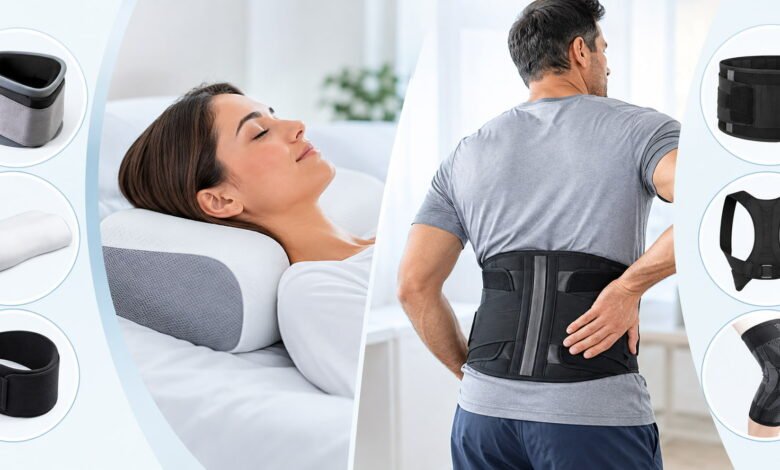
Orthopaedic supports can help provide stability, comfort and support for people managing joint discomfort, recovering from certain injuries or maintaining mobility during everyday activities. However, choosing the right Orthopaedic product involves more than selecting a brace or support based on the affected body part. The intended purpose, level of support, fit, material and recommendations from a healthcare professional all influence whether a product is appropriate.
From knee braces and wrist splints to ankle supports, lumbar belts and cervical pillows, different products serve different needs. Understanding these differences can help individuals and caregivers make more informed decisions without relying solely on product descriptions or general recommendations.
According to the World Health Organization, approximately 1.71 billion people worldwide live with musculoskeletal conditions. This highlights the importance of understanding back, neck and joint health, along with the role that appropriate support products and professional rehabilitation guidance can play in managing individual needs.
What Are Orthopaedic Supports?
Orthopaedic supports are devices designed to support specific body areas, help limit certain movements, provide compression or assist with positioning. Depending on their design, they may be used during daily activities, sports, rehabilitation or recovery under professional guidance.
Common types of orthopaedic support products include:
- Knee braces: Provide varying levels of support for the knee, depending on the design and intended use.
- Ankle supports: Help support the ankle during selected activities or recovery from certain injuries.
- Wrist splints and braces: Help support the wrist or restrict particular movements when indicated.
- Elbow supports: Provide compression or support around the elbow for selected conditions.
- Lumbar support belts: Provide external support around the lower back in specific situations.
- Cervical support pillows: Help position the head and neck during sleep, depending on the pillow’s shape and the individual’s sleeping posture.
These products are not interchangeable. A soft compression sleeve, for example, serves a different purpose from a rigid brace designed to restrict movement. Selecting a product should begin with understanding the problem it is intended to address.
How to Choose the Right Orthopaedic Support
1. Identify the Intended Purpose
The first step is to establish why support is needed. Is the goal to improve comfort during daily activities, provide external support after an injury, limit a particular movement or assist with a rehabilitation plan?
A product suitable for general activity may not provide the level of support required after surgery or a significant injury. Similarly, a device designed to restrict movement may be inappropriate for someone who only needs light compression.
Consider the following factors before making a selection:
- The body area requiring support.
- The activity during which support is needed.
- Whether the product is intended for short-term recovery or ongoing use.
- Any movement restrictions or precautions recommended by a healthcare professional.
If the cause of pain or instability is unclear, seek an appropriate assessment before choosing a support device.
2. Understand the Level of Support Required
Orthopaedic supports range from flexible sleeves to more structured braces and immobilization devices. Their features determine how much movement they allow and what type of support they provide.
Flexible supports generally offer light compression and may be suitable for selected everyday activities.
Structured braces may include straps, hinges or reinforced panels to provide additional support or help control movement.
Rigid braces and immobilisers are designed to restrict movement more substantially and may be prescribed for particular injuries or recovery situations.
More rigid support is not automatically better. The appropriate level depends on the condition, the intended activity and clinical guidance. Using a device that is too restrictive or wearing one for longer than recommended may interfere with normal movement or rehabilitation.
3. Check the Fit and Sizing
Correct fit is essential for comfort and appropriate function. A support that is too loose may shift during movement, while one that is too tight can cause discomfort, skin irritation or circulation problems.
Before purchasing an orthopaedic brace or support, review the manufacturer’s sizing chart and measuring instructions. Depending on the product, measurements may be required around a joint, limb or other body area.
Check that:
- The product fits securely without excessive pressure.
- Straps and closures remain in place during the intended activity.
- The support does not create painful pressure points or excessive friction.
- The device does not cause numbness, tingling, unusual swelling or changes in skin colour or temperature.
If these symptoms develop, remove the device when safe to do so and seek medical advice, particularly if symptoms persist. A healthcare professional can help assess whether the size, design or wearing instructions need to change.
4. Consider Materials, Comfort and Breathability
The materials used in an orthopaedic support can affect comfort, durability and ease of maintenance. Soft, breathable fabrics may be preferable for certain products worn during everyday activities, while structured materials may be necessary when greater support is required.
Consider the environment in which the device will be used. Someone wearing a support during physical activity may prioritise moisture management and secure fastening. A person using a brace for extended periods may need to pay closer attention to pressure points, skin sensitivity and cleaning requirements.
607 million people worldwide were living with osteoarthritis in 2021, according to a 2025 study using Global Burden of Disease data.
Review product instructions for washing, drying and inspection. Damaged fasteners, stretched elastic or worn structural components may affect how well a support functions.
Comfort is important, but it should not override the device’s intended purpose. A comfortable product is not necessarily appropriate if it does not provide the required type of support.
5. Match the Product to Your Daily Activities
The most suitable support is one that fits the intended use and the individual’s practical needs. Consider whether it will be worn while walking, working, exercising, sleeping or completing rehabilitation exercises.
For example, a knee support used during walking may need to remain stable without unnecessarily restricting movement. A wrist splint intended for a particular recovery period may need to limit movement more deliberately.
Ask these questions before selecting a product:
- Will it fit comfortably under ordinary clothing or footwear, where relevant?
- Can it be applied and removed safely?
- Does it allow the movements needed for the intended activity?
- Is it compatible with any prescribed rehabilitation plan?
- Are there specific instructions about when and how long to wear it?
These practical details can make a meaningful difference to whether the product is suitable for regular use.
Choosing the Right Support for Different Body Areas
The following overview explains common options and the main considerations involved in selecting them.
| Body area | Common support option | Key consideration |
|---|---|---|
| Knee | Knee sleeve or brace | Determine whether compression, stability or movement control is required. |
| Ankle | Ankle brace or support | Consider the activity, injury history and required degree of restriction. |
| Wrist | Wrist brace or splint | Check which movements need support or limitation. |
| Elbow | Elbow sleeve or brace | Match the design to the intended activity and symptoms. |
| Lower back | Lumbar support belt | Confirm whether a belt is appropriate for the particular condition and duration of use. |
| Neck | Cervical support pillow or prescribed support | Consider sleeping posture, comfort and any clinical recommendations. |
This comparison is a starting point rather than a diagnosis or a substitute for individual assessment. The same body area can have different support requirements depending on the underlying problem.
Cervical Support Pillows: An Important Consideration
Neck support products deserve particular attention because pillow selection affects head and neck positioning during sleep. A cervical support pillow typically has a shape intended to accommodate the neck and maintain a particular sleeping position. A regular pillow may offer a different height, shape and distribution of support.

Neither option is universally best. The appropriate choice depends on factors such as sleeping position, shoulder width, mattress characteristics and individual comfort.
Persistent neck pain, pain following an injury or symptoms accompanied by weakness, numbness or tingling warrant medical assessment rather than relying on a pillow change alone.
Common Mistakes to Avoid When Choosing Orthopaedic Supports
Even a well-designed product may be unsuitable if it is selected or used incorrectly. Several common mistakes are worth avoiding.
Choosing based on appearance alone: A product’s shape or construction does not establish whether it is appropriate for a particular condition.
Assuming tighter means better: Excessive compression can cause discomfort and may affect circulation. Supports should fit securely without creating harmful pressure.
Using the same support for every activity: A device appropriate for one situation may not offer suitable support for another.
Ignoring wearing instructions: The recommended duration and method of use vary by product and condition. Follow professional guidance and manufacturer instructions.
Continuing despite worsening symptoms: Increased pain, numbness, skin changes or swelling may indicate that the product needs to be removed or reassessed.
Delaying professional assessment: A support may help manage a specific need, but it does not necessarily address the underlying cause of pain or instability.
When Should You Consult a Healthcare Professional?
Professional advice is particularly important when selecting a support after surgery, following a significant injury or when a condition requires restricted movement. A clinician can help determine whether a brace, splint, support belt or another intervention is appropriate.
Seek prompt medical assessment for severe or worsening pain, a suspected fracture, significant swelling, a joint that appears deformed or an inability to bear weight after an injury.
New or progressive weakness, numbness or other neurological symptoms also require assessment. Sudden neurological symptoms or symptoms associated with a serious injury may require emergency care.
For less urgent concerns, a physician, physiotherapist or other appropriately qualified healthcare professional can help identify the purpose of the support, explain correct fitting and establish when it should be used.
Final Thoughts
Choosing the right orthopaedic support requires a balance of function, fit, comfort and safety. The best option is not necessarily the most rigid, expensive or feature-rich product. It is the one that suits the intended purpose and provides the appropriate level of support for the individual’s needs.
By understanding the differences between support types, checking sizing and materials, following wearing instructions and seeking professional guidance when necessary, individuals can make more informed decisions about orthopaedic support products. A considered selection process also helps ensure that external support complements, rather than replaces, appropriate assessment and rehabilitation.
Also read:

Lynette Rae is a passionate writer who specializes in creating clear, engaging, and reader-focused content. With a keen eye for detail and a commitment to quality, she delivers insightful pieces that inform, inspire, and add value across a range of topics.